Children and bias
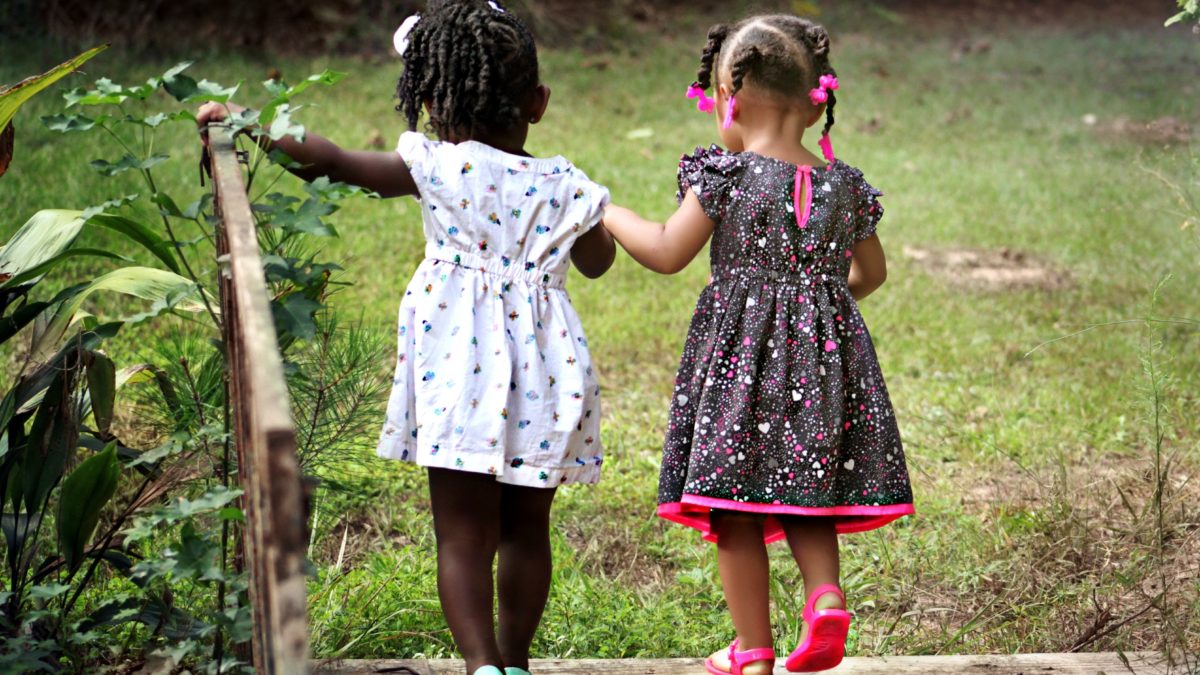
A child is not born with bias.
Children learn to be bias. What a profoundly sad sentiment. Children are influenced by their surroundings, parents, peers and the world.
The world is diverse in culture, ethnicity, and languages and is a kaleidoscope of colours, customs and beliefs.
Prejudice, bias and stereotyping are things that can contribute to a lack of self esteem and devaluing of a person.
We all have our own personal prejudices and bias, its part of being a human; however, it is how we deal with them and project them that have an influence on children and the development of theirs.
Our actions and behaviours should be as such that we are modelling acceptance of all people and provide positive experiences relating to differences.
Children developing bias
Children don’t know about discriminating against individuals and groups.
Much of all the biases they learn, are what occur in their early years.
They learn biases through socialization, enculturation and family beliefs and biases and through their interaction with society, TV and other media, teachers, carers, literature, etc.
The judgments they learn are important in determining their latter attitudes.
These attitudes determine their behaviour in the way that they treat others on the bases of their race, gender, age, ability, religion and cultural heritage.
By the time a child is 7 or 8 yrs they have learnt or developed gender and race bias, bias against disabled, cultural, lifestyle bias, socioeconomic, class bias and even a bias against those who do not conform to society’s view of the way one should look.
Children are easily influenced and it is at this age that they can learn that while everyone is different in some way everyone is the same as well and we all have feelings and like to be liked and respected.
Strategies to encourage tolerance
- Everyone is worthy, lovable, equal, important and deserves love and respect.
- People are all similar and different
- Everyone has feelings
- Some physical attributes are the same but some are different
- It’s good and OK to try new things and experiences
- There are different kinds of families, they live in different ways
- People can work together and help one another
- Some things are fair but some are unfair
- People can think different things and have different points of view but not one is right or wrong.
- Celebrating holidays through activities can contribute to anti-bias learning and promote acceptance of diversity.To promote the acceptance of cultural diversity we need to recognize and introduce culturally and developmentally appropriate holiday activities to young children. This is because not only can they be fun to do, but participating in celebrations and rituals enhances children’s feelings of being part of a group/society and allows them to gain an appreciation and awareness of their own and other cultures and experiences. We need to honour every group and be careful not to treat some holidays as “exotic” and others as regular.