Process v’s product
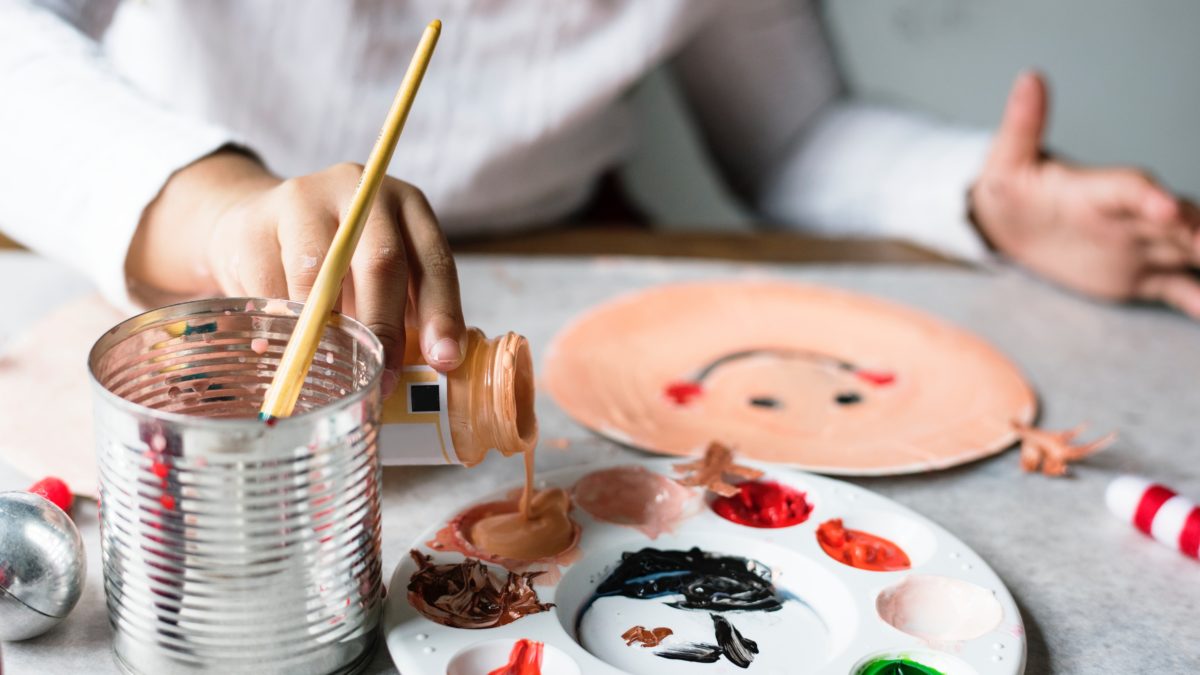
Art plays an important role in a child’s development.
Ideally, a child should have the opportunity to engage in art experiences which have a higher focus on the process of the art experience rather than the end product produced.
Greek philosopher Aristotle once said: “The aim of art is to represent not the outward appearance of things, but their inward significance; for this is true reality”.
This applies for a child’s art. It is far more beneficial for them in the ‘process’ of doing the activity rather than being focused on the outcome or the ‘product’.
When a child is pushed or guided to produce something in particular not only are we expecting a certain product, but we are placing them in a stressful situation of trying to please and the stress of getting it right.
Placing more focus on the product emphasizes to a child that they are not good enough and that they cannot make decisions.
Authentic art experiences emphasis the originality of the child and place value back onto their work and it allow them to want to take ownership and enjoy the process.
A child is much more likely to learn and develop skills this way and want to do it again.
Why process is more important than product
Every year you will surely have this conversation at least once. There is a very important reason that the process is key.
The process is the learning opportunity for the child.
Encouraging children to engage within the making process provides great learning opportunity through exploration, expression, and discussion.
Open-ended activities that focus on the process, and not necessarily the end product, provide children with authentic, differentiated, and holistic methods of exploration and learning.
Product learning experiences are where there is an expected outcome, a prescribed ‘product’ to achieve. It has the potential for the child to feel unable to achieve what is expected.
There is actually a place for both process and product art and experiences to a certain degree in a child’s overall learning, although the emphasis should squarely be placed on the process as the more important element.
Children learn to feel relaxed, engaged and able to express themselves more freely with process experiences.
It provides the tools to develop many skills such as language skills through discussion of their art; cognitive skills through predicting,planning and problem solving.
Process art experiences look like
- No prescribed outcome
- No step-by-step instructions
- No set example for a child to follow and produce
- The focus is on the doing- the techniques, the tools, the materials
- There is no right or wrong way. The child is not potentially set up to fail and it allows the child to engage at their own developmental level
- Promotes decision making, problem solving, predicting, discussion
- Provides for feeling of pride and achievement
- The experience is more relaxed
- There is uniqueness in every child’s end piece.
Process focused experiences provide the opportunity for freedom of self expression and facilitates their learning of prediction, planning and problem solving over their piece as they create their art.
In order to allow complete creativity for the child the experiences need to offer plenty of time, accessibility to new and varied and open ended materials and the tools required to promote creativity.
Product art experiences look like
- There is a prescribed outcome- a particular product expectation
- There is a sequence to follow. There is a step-by-step process
- There is generally a example, often educator/adult produced
- The focus is on the end product
- Less opportunity for a child’s creativity and interpretation as it is expected that all completed products look very similar
- Is a very closed experience
- A higher potential for the child to become frustrated if they feel they are unable to meet expectations. Potentially setting a child up for failure.
It can be argued that product focused art experiences do assist to teach children to follow step by step instructions and utilize skills such as tracing and cutting, however, there are multiple other opportunities for experiences that offer the same access to learning without the pressure and structured, single outcome product.