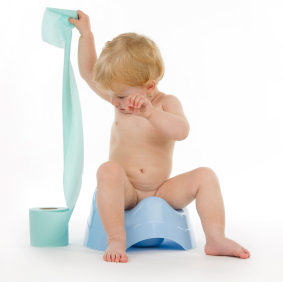
Toilet training
Toilet training is a big milestone.
Don’t try to rush the toilet training phase. A child needs to be developmentally ready.
Premature toilet training will frustrate you and place unnecessary pressure on and be distressing for the child.
It should never be a battle of the wills.
A child between the ages of 18 months and 3 years will start to show signs of readiness to start toilet training.
Signs of readiness are vital in the success and achievement for a child.
Preparing for toilet training
- Don’t try for toilet training too early. It is much easier when children are aged 2 years+. It is virtually impossible under 18 months because the sphincters (muscle outlets) of the bladder and bowel aren’t yet under their control. If you manage to catch some wee in the potty then it’s probably more luck on your part rather than mastery on the part of your child.
- Consistency is the key.
- There is wide variation in how quickly a toddler gets out of nappies – some of which is probably genetic. Lateness in getting bladder and bowel control does run in families and boys may take longer to get the hang of it than girls. Having said that if any child is not completely toilet trained by 4 yrs it is advised to talk to a Dr if you have been trying to toilet train without success.
- Using a potty is a great way to encourage a child to toilet train as a toilet may seem too big and ‘scary’ to them. Let the child choose the potty with you as this gives them ownership too. Let them play with it when first purchased to get used of it. This is a personal choice. Some children don’t ever use a potty and cope with the ‘big’ toilet fine while others may balk at doing a poo in particular. Additionally, there are those little munchkins who might take the opportunity to use it as another toy! You know your child and will have a feel if a potty is the best way to introduce toilet training.
- There are many various aids to assist in the toileting and the most common used are a toilet a step and/or a toilet seat insert.
- Talk to them about it. It’s important not to just launch them into it without any forewarning or conversation. It’s a good chance for them to chat about their thoughts and feelings and is a good chance for you to give a clear idea of what it involves for them.
- Read books on toilet training such as “I want my potty”. Reading books not only opens the lines of communication it allows for them to see others tackling the toilet training process.
- While it is not so much a golden rule it is a great idea if at all possible to start the toilet training process in summer. It makes it easier on us for washing but more importantly it means that it’s not as cold for them when there are accidents.
- Try to remain calm. The less pressure a child feels the more successful it generally is.
Remember against the best of intentions and planning sometimes accidents will happen!
Even after the age of 4 years and when you think they are successfully toilet trained.
They will forget or be engrossed in their play.
If your child is ill then they may/will regress or get to a stand still. This is OK and to be expected, especially if it is only in the beginning stages of toilet training. Just pause and look after the illness and child and come back to the toilet training at a later date rather than try to preserve with it while they are sick.
Encourage them to go regularly.
The more reminders they get, especially in the beginning, can help to not only remind them but get them into a good habit of going often and generally less accidents will happen with constant reminders.
Just remember not to remind so much it turns into nagging.
If they are stressed about other things they may not be as ‘successful’. Their mind will just not be on the task and accidents may happen. That’s OK too.
Strategies for starting toilet training
- Wait until your child is ready: There is no such thing as a ‘right’ age to start. Each child does develop at an individual rate. It really depends on the child. It is generally between 1 ½ years – 3 years that children master the skills but it can also be much later for some children. There are some readiness signs to look out for in determining if your child is ready to attempt it.
- Look for signs of readiness: These can include:
- Being able to pull elastic waist pants up & down by themselves.
- Seemingly knowing or alerting you to when they need changing- showing that they know they have soiled their nappy or them telling you they are wet.
- Having tell tale signs they are going in their nappy- such as the grunting or squatting when doing a poo, etc.
- Having a dry nappy for several hours.
- Follow simple instructions.
- Shows an interest in toileting.
- Take one step at a time: Toilet training takes many steps to the point of it being mastered.From start to finish it includes:
- Knowing when they need to go.
- Telling/showing you when they need to go.
- Undressing.
- The act of going to the toilet.
- Wiping- its important to teach them to wipe from front to back to prevent infections.
- Re-dressing.
- Flushing.
- And finally hand washing. Hand washing is an important step to teach and show them the correct way to wash their hands.
- Each step takes time so reinforce positively the ‘job’ they are doing as they learn/master each step. You will need to show them what and how to do things and it may take many times of reminding.
- Use the right language: Once they can communicate well is a first sign that they are ready. This can be also through non-verbal cues. It is just as important to then use the right language and speaking simply (poo, wee, pee, etc) and positively when you speak about toileting. Such phrases as “You’ve dirtied your nappy” are negative and not as productive as positive ways to talk about toileting.
- Praise: Recognize the effort and the time they have taken to try. Praising the child and letting them know you are proud of them with or without reminders. It is generally not necessary to use rewards or star charts but if you do use them its best to phase them out closer to the beginning of the process so that toileting becomes a normal part of the process without rewards attached. Praise even if they have not achieved anything but have attempted.
- Consider the child: We all know that each child is different including their temperament so the way we approach toilet training will depend on the child and may vary slightly from each child. For example, if they are generally shy then successful toileting may take more encouragement and support than if they are outgoing. Work with their attention span as some children have longer ones than others and be aware of where they are at and their level of development and ability to complete new tasks.
- Make it a coordinated approach with all those that care for the child: By sharing the training plans there will be consistency. This will eliminate confusion for the child and a better and generally lead to a quicker success.
- Pick the right time: Warmer months are generally easier to start the training process. It’s also important to pick a time when there is not a lot of upheaval or stress as they will not be as focused, you will not be as patient and it will not be as successful.
- Include them: If you are going to use a potty get them involved and let them help in the choosing of it. It is better to use more positive phrases when first discussing the option of toileting such as “special potty” rather than “big girls potty”. This way you are not comparing them to being a baby or a big girl and adding pressure. If you are not using a potty then the same principles apply as if you were using one and include them, use positive language and get them involved.
- See Dr if the child is: Complaining when they wee; has blood or pus in it, is constantly dribbling urine or has a hard time urinating.
- Don’t make them wear WET pants for long periods to ‘teach’ them: Leaving a child in wet or soiled pants is not only not going to ‘teach’ them it will lead to consequences such as the child resisting toilet training altogether, a rash or sore bottom. This actually is a form of child abuse.
- Don’t pressure them to toilet train: Toilet training is not a competition and your anxiety will be re-laid to the child. You are trying to foster independence but it will only work effectively if /when your child is ready. Don’t feel you must buckle to pressure to train the child because you are told to. Take a relaxed attitude.
- Don’t rush the process: By pushing the child to toilet train then they may resist by holding the urine/bowel movements in and this can lead to serious complications. Remember to look for the readiness signs and not to try until the child is around 18 months at least.